
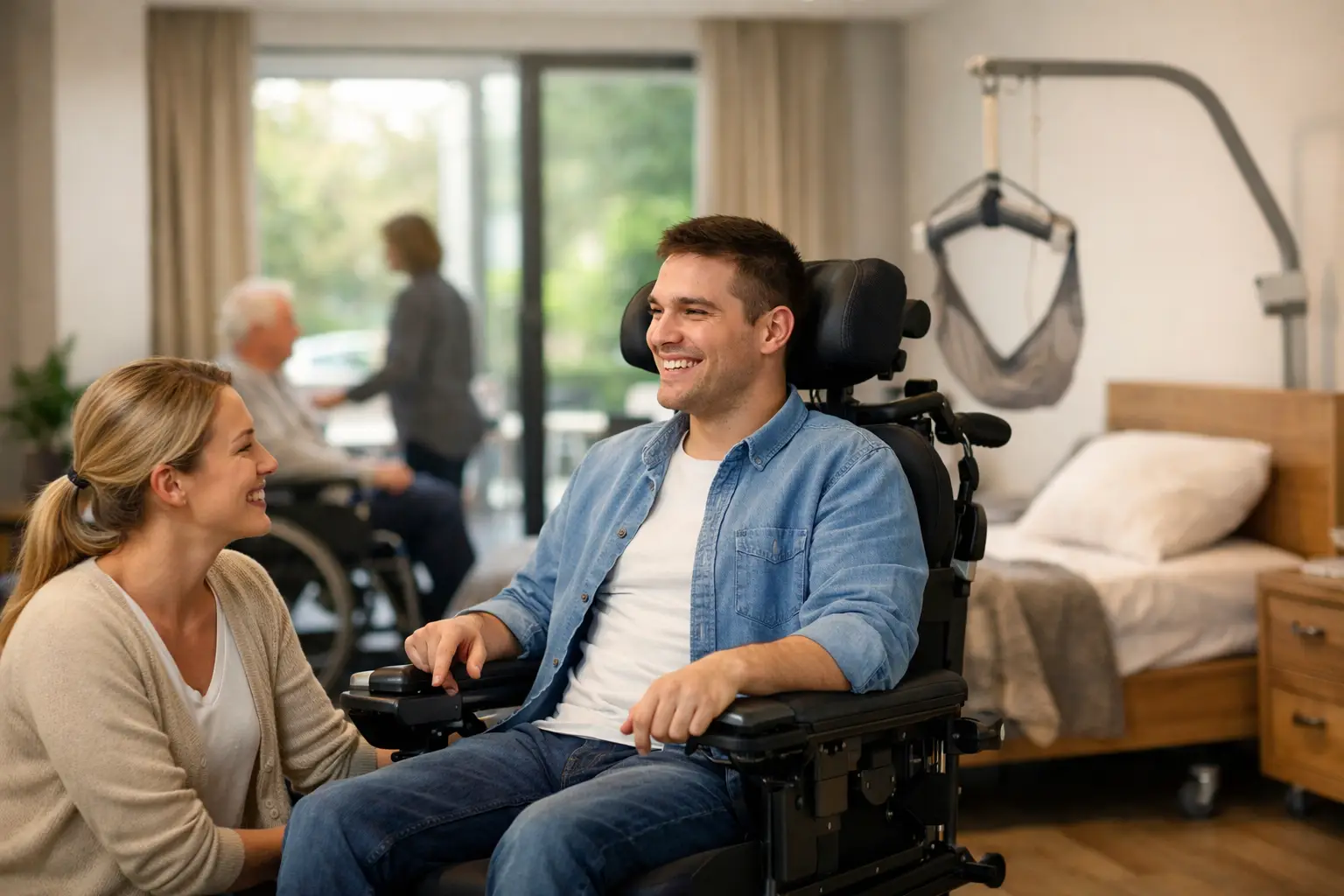
A home can either make daily life harder or support it properly. For people living with extreme functional impairment or very high support needs, the design of the property itself can affect safety, independence, privacy and even whether support workers can provide care effectively. That is where the question what is specialist disability accommodation becomes so important.
Specialist Disability Accommodation, usually called SDA, is a type of housing funded through the NDIS for a small group of participants with very high support needs. It is not a support service on its own, and it is not available to every NDIS participant. SDA refers to the physical home or dwelling designed to help a person live more safely and independently, while also making it easier for supports to be delivered.
What is specialist disability accommodation under the NDIS?
Under the NDIS, SDA is funding for the housing itself rather than the day-to-day support delivered inside it. In simple terms, it helps cover the cost of specialised housing built or modified for people who need features that a standard home usually cannot provide.
That might include wider doorways for wheelchair access, reinforced ceilings for hoists, better assistive technology integration, emergency backup power, accessible bathrooms, improved visibility for overnight support, or layouts that reduce risk for people with complex behaviours or very high physical support needs. The exact design depends on the participant and the SDA category of the home.
This distinction matters. Many people hear SDA and assume it includes personal care, community access or help with meals and medication. Those supports are usually funded separately, often through Supported Independent Living, personal care or other NDIS support categories. A participant may have SDA without SIL, SIL without SDA, or both together. It depends on their goals, functional capacity and support needs.
Who is SDA for?
SDA is intended for a small proportion of NDIS participants. Generally, it is for people who have an extreme functional impairment or very high support needs and who require specialist housing solutions because mainstream housing is not suitable.
That can include participants who need significant physical access features, constant support availability, assistive technology built into the home, or an environment designed to reduce risks linked to mobility, health complexity or behaviour. It may also apply where ordinary housing creates barriers to independence, places strain on informal carers, or makes support delivery unsafe or impractical.
Eligibility is not based only on diagnosis. The NDIS looks at the impact of a person’s disability on daily living and whether SDA is a reasonable and necessary support. Two people with the same condition may have very different housing outcomes because their functional needs, informal supports and daily risks are different.
How SDA is different from other accommodation supports
A lot of confusion comes from the number of accommodation options under disability services. SDA is only one part of the picture.
Supported Independent Living, or SIL, is the support a person receives to help with daily tasks such as personal care, cooking, cleaning and developing independence at home. Short-Term Accommodation, or STA, is usually used for respite or temporary stays. Medium-Term Accommodation, or MTA, can help when someone is waiting for a long-term housing option to become available.
SDA is different because it is about the building. SIL is about the staffing and support. STA and MTA are usually temporary. A participant may move into an SDA home and also receive SIL if they need regular in-home support. In practice, many participants with complex needs require both the right property and the right care team for the arrangement to work well.
The main SDA design categories
Not every SDA property is the same. Homes are typically designed and enrolled under categories that reflect different levels of accessibility and support.
Improved Liveability
This category is designed for people with sensory, intellectual or cognitive impairment who need a more accessible and predictable environment. It may include features that improve wayfinding, reduce confusion and support safer movement through the home.
Fully Accessible
These homes are built for participants with significant physical impairment. They generally include step-free access, wider corridors and doors, accessible bathrooms and kitchens, and layouts that support mobility aids.
High Physical Support
This is for participants with very high physical support needs. These homes often include advanced features such as ceiling hoist provisions, emergency power solutions, assistive technology readiness and space for complex equipment and support delivery.
Robust
Robust SDA is designed for participants who need a very durable environment with features that reduce the risk of injury or damage. This type of housing is carefully considered and is not suitable for everyone. The design aims to improve safety, stability and quality of life while supporting a more sustainable care arrangement.
What does SDA funding actually pay for?
SDA funding contributes to the cost of the specialist dwelling. It does not replace ordinary living costs. A participant still generally contributes a reasonable rent contribution and other day-to-day household expenses, depending on their arrangement.
The SDA payment reflects the design category, location, dwelling type and whether the participant shares with others. A purpose-built apartment with high physical support features will be funded differently from a shared house enrolled under another category. This is one reason why the right housing match matters. The goal is not simply to find any vacancy. It is to find a home that fits the participant’s support model, accessibility needs and preferences.
How participants get approved for SDA
Approval usually requires evidence showing why specialist housing is necessary. That often includes functional assessments, reports from occupational therapists or other allied health professionals, and information about current living barriers, safety risks and support requirements.
The NDIS then assesses whether SDA is reasonable and necessary. This process can take time, and the quality of the evidence matters. Clear reports that explain how the person’s disability affects everyday living are often more helpful than broad statements about diagnosis alone.
For families, carers and support coordinators, this can feel overwhelming, especially when housing needs are urgent. Hospital discharge, carer burnout, inaccessible homes or breakdowns in current accommodation can place real pressure on decision-making. In those situations, it helps to work with providers who understand both accommodation pathways and complex support delivery, because the property and the support model need to align.
What to look for in an SDA home
The best SDA home is not always the newest one or the one with the most features. It is the one that supports the participant’s actual life.
Location matters. Some people need to stay close to family, medical services, community networks or cultural supports. Others may prioritise quiet surroundings, access to transport or compatibility with co-residents. Layout matters too. A property may look suitable on paper but still be a poor fit if it limits privacy, makes manual handling harder or does not support the participant’s routine.
It is also worth asking how supports will be delivered. Is there space for overnight assistance if required? Can clinical and personal care be provided safely? Is the home likely to support the person’s independence over time, not just their immediate needs?
These are practical questions, not minor details. Good SDA should improve daily living, reduce avoidable risk and create a more stable foundation for support.
Why SDA can make such a significant difference
When a person is living in housing that does not meet their needs, every part of the day can become harder. Transfers take longer. Personal care may be less safe. Privacy can disappear. Families may carry unsustainable caring responsibilities. Community participation can drop because so much energy goes into managing the home environment.
The right SDA can change that. It can support independence in ordinary routines, improve dignity in personal care, reduce pressure on carers and make support delivery more consistent. For some participants, it also creates a more realistic path out of hospital, aged care or unsuitable temporary accommodation.
That said, SDA is not a one-size-fits-all answer. Some participants are better supported through home modifications, SIL in a standard property, or another accommodation pathway. The right option depends on the person, not just the funding category.
A practical way to think about SDA
If you are asking what is specialist disability accommodation, the clearest answer is this: it is housing designed for people whose disability-related needs cannot be met well in a standard home.
It sits at the intersection of accessibility, safety and independence. When done properly, it does more than provide a roof over someone’s head. It gives participants a home where supports can work, daily life can run more smoothly and long-term goals feel more achievable.
For participants, families and referrers, the next step is not to chase a label. It is to ask whether the current living arrangement is genuinely meeting the person’s needs, and if not, what type of housing and support setup will.