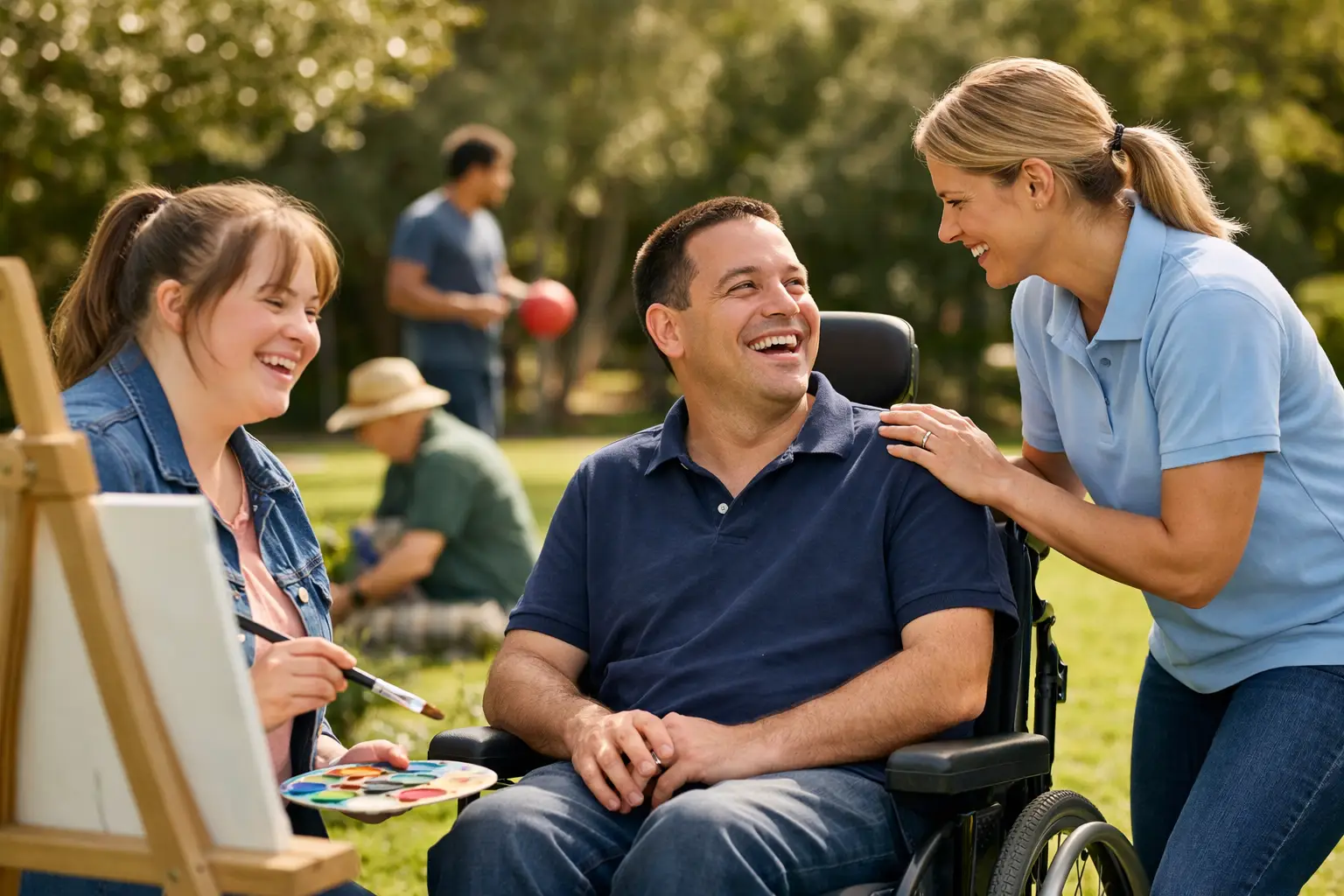
A good community participation plan is not about filling a calendar. It is about making everyday life more possible, more connected and more meaningful. For many participants, NDIS community participation support is the bridge between staying home and taking part in the places, activities and relationships that matter.
That can look very different from one person to the next. For one person, it may mean building confidence to catch public transport and attend a weekly art group. For another, it may involve high-intensity support to safely access a community program, sporting activity or volunteering role. The right support is never one-size-fits-all. It should reflect the participant’s goals, health needs, communication style, routine and preferred way of living.
What NDIS community participation support actually means
Under the NDIS, community participation support generally refers to help that enables a participant to take part in social, recreational, educational and community-based activities. The focus is not simply attendance. It is about participation in the real sense – being included, building skills, forming connections and increasing independence over time.
This support may be funded under Core Supports or Capacity Building Supports, depending on the participant’s plan and goals. In practice, that can include assistance to attend appointments, local events, classes, social groups, fitness activities, day programs or volunteering. It can also include support to develop the confidence and practical skills needed to participate more independently in the future.
The distinction matters. Some participants need ongoing assistance because of complex disability, mobility requirements, behaviour support needs or medical factors. Others may want short-term support that gradually reduces as their confidence grows. Both approaches are valid. Good support starts with the person, not the roster.
Why community participation matters beyond social outings
Community participation is sometimes misunderstood as something optional or secondary. In reality, it is closely linked to mental wellbeing, confidence, routine, communication, life skills and a person’s sense of identity.
When people are excluded from community life, the impact can be broad. Isolation can affect mood, motivation and confidence. Skills can plateau when there are limited opportunities to practise them in real settings. Families and carers can also feel the pressure when a participant has few safe, consistent ways to engage outside the home.
By contrast, the right support can create practical change. A participant may learn to manage transitions better, communicate preferences more clearly, build travel skills, develop friendships or simply feel more comfortable being out in the community. These outcomes are not small. They shape independence and quality of life.
For participants with complex or high-intensity needs, community access often depends on whether a provider has the staffing capability, clinical understanding and risk management systems to support them safely. That is where provider capability becomes especially important. A well-intentioned plan means very little if the provider cannot deliver it consistently.
What good community participation support looks like
Effective support is purposeful, flexible and safe. It should fit around the participant’s goals, rather than expecting the participant to fit around a standard service model.
That begins with understanding what meaningful participation actually looks like for the individual. Some people want to join mainstream activities and build broader social networks. Others prefer one-on-one outings, quieter settings or structured programs with familiar support workers. Cultural needs, sensory preferences, communication needs and support ratios all matter.
Good support workers do more than accompany someone from one place to another. They help reduce barriers. That might mean preparing a participant before an outing, supporting emotional regulation in busy environments, assisting with mobility equipment, administering personal care, managing mealtime needs, or using communication strategies that help the participant engage with others.
There is also a balance to strike between support and independence. Too little support can make participation unsafe or stressful. Too much can limit confidence and self-direction. The right approach usually changes over time, especially as trust develops and the participant builds skills.
Community participation support for complex needs
Participants with complex health, behaviour or personal care needs are often the ones most at risk of missing out on community life. Not because they lack goals, but because suitable providers can be harder to find.
In these cases, community participation may involve higher staff ratios, specialised training, nurse-led oversight or close coordination with allied health teams, behaviour support practitioners and families. Transport, medication timing, manual handling, continence support and communication methods may all need to be factored into planning.
This is not a reason to lower expectations. It is a reason to provide the right level of capability. With the right preparation and staffing, many participants with high-support needs can engage in community activities in ways that are safe, respectful and genuinely enjoyable.
How to know if a support provider is the right fit
Choosing a provider for community participation is about more than availability, although capacity does matter. It is also about whether the provider can deliver consistent, person-centred support in real-world settings.
Start by looking at how the provider plans support. Do they take time to understand the participant’s goals, routines and risks? Can they adapt support for communication needs, behaviours of concern or health requirements? Are they clear about transport arrangements, staffing continuity and what happens if a usual support worker is unavailable?
For participants leaving hospital, moving into SIL or SDA, or transitioning from another provider, continuity becomes even more important. Community participation should not sit in isolation from the rest of a participant’s life. It works best when it is connected with accommodation supports, personal care, behaviour support strategies and broader independence goals.
Responsiveness also matters. Families, support coordinators and referrers often face delays when trying to arrange services, especially for urgent or complex referrals. A provider that can onboard quickly, assess needs properly and put the right support in place without unnecessary delays can make a significant difference to the participant’s stability and progress.
NDIS community participation support and goal setting
The strongest outcomes usually come from linking NDIS community participation support to clear, practical goals. Those goals do not need to sound formal. They just need to reflect what the participant wants their life to look like.
A goal might be building confidence to attend a weekly social activity, learning to use community transport, joining a cultural group, improving communication in public settings or becoming more comfortable with new environments. For someone else, it may be maintaining current community access safely and consistently because that routine supports mental health and overall wellbeing.
This is where realistic planning is important. Progress is not always linear. A participant may do well in one setting and struggle in another. Noise, fatigue, staffing changes, transport delays or health fluctuations can all affect how an outing goes. That does not mean the support is failing. It means the plan needs to respond to the real conditions of the participant’s life.
Good providers do not treat those moments as setbacks to hide. They use them to adjust support, reduce pressure and keep moving towards meaningful participation in a way that protects dignity and confidence.
Building confidence through consistent support
Trust is often the deciding factor in whether community participation becomes sustainable. Participants are more likely to try new things, communicate openly and build independence when they feel safe with the people supporting them.
Consistency in staffing can help reduce anxiety, particularly for participants with autism, psychosocial disability, acquired brain injury or complex trauma backgrounds. Familiar support workers are more likely to understand communication cues, early signs of distress, sensory triggers and the practical strategies that help a participant feel regulated and engaged.
That consistency also supports families and carers. When they know the provider is dependable, communication is clearer and planning becomes easier. For many households, that reliability is not a bonus. It is essential.
Providers such as Treasure Disability Care are often sought when standard support models are not enough – particularly where fast onboarding, complex care capability and dependable community-based support are needed. In those situations, readiness is part of quality.
A more meaningful way to participate
Community participation should never feel like a box to tick. At its best, it helps people build a life that feels connected, respected and their own. Whether the goal is greater independence, stronger routine, social connection or safe access to the wider community, the right support makes that possible in practical, everyday ways.
When support is tailored properly, participation stops being something a person is taken to and becomes something they genuinely take part in. That is where confidence grows, and where real progress often begins.