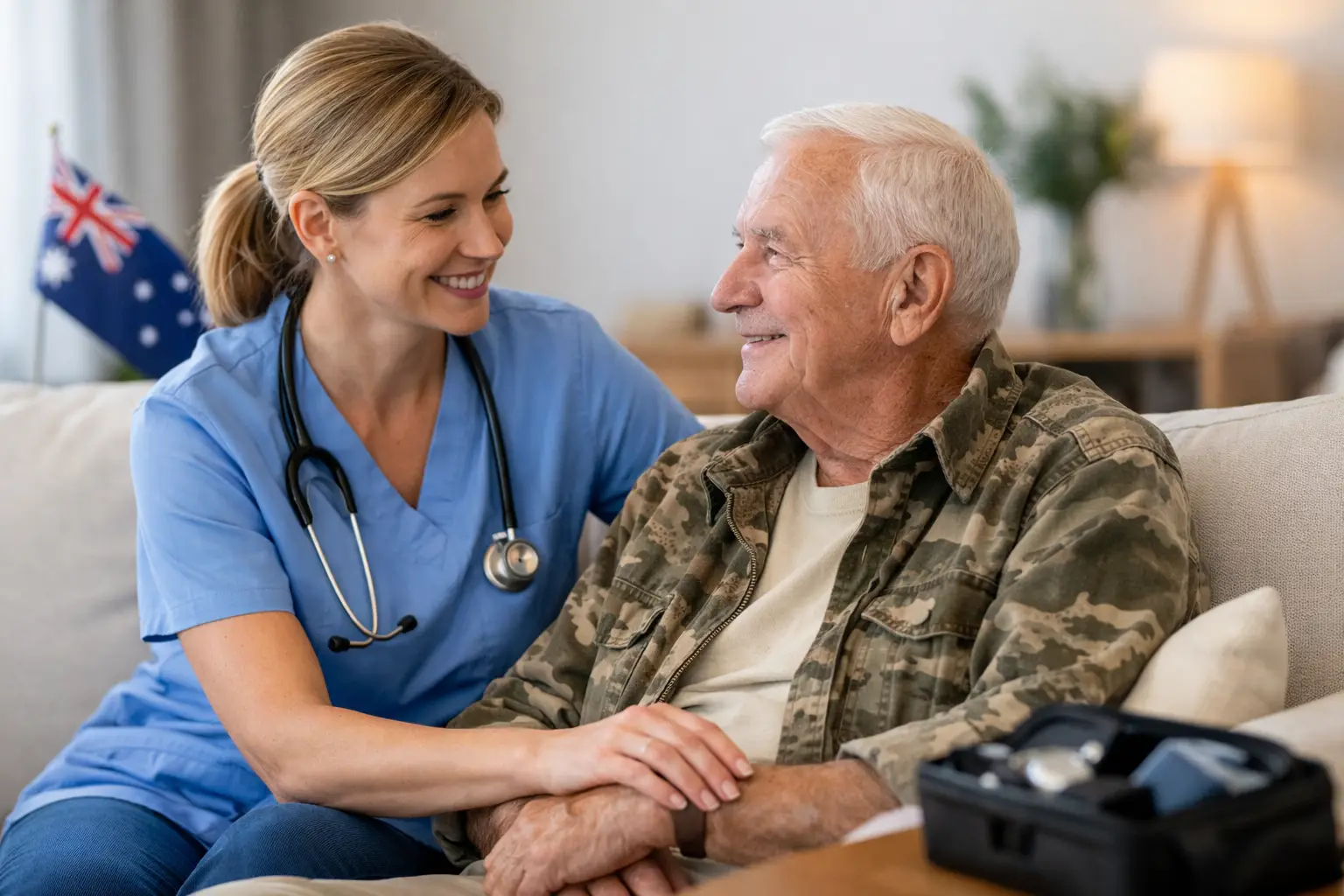
When a veteran needs support at home, delays and confusion can make an already difficult situation harder. DVA community nursing services are designed to help eligible veterans receive nursing and personal care in their own home, with support that is practical, clinically appropriate, and centred on dignity.
For many veterans and families, the goal is straightforward – stay safe at home, manage health needs well, and avoid unnecessary disruption. That may mean help after a hospital stay, support with medications, wound care, continence management, or assistance with daily personal tasks. It can also mean having a provider that responds quickly, communicates clearly, and understands that care needs do not always fit neatly into a standard timetable.
What are DVA community nursing services?
DVA community nursing services are home-based nursing and personal care supports funded for eligible veterans through the Department of Veterans’ Affairs. The purpose is to maintain health, independence, and quality of life while reducing the need for hospital or residential care where home support is appropriate.
These services can include both clinical nursing and personal assistance. Depending on a person’s circumstances, support may involve monitoring health conditions, dressing wounds, managing medication, continence support, help with showering or dressing, or education that helps the veteran and family manage care more confidently at home.
The exact mix of services depends on assessed need. Some veterans require short-term support during recovery. Others need ongoing nursing input because of chronic illness, reduced mobility, complex medical needs, or age-related decline. That difference matters because the right service model is not just about eligibility – it is about matching the level of care to what is actually happening in the home.
Who may benefit from DVA community nursing services?
Veterans recovering from surgery or illness often benefit from short-term in-home nursing while strength and function return. Others may need longer support because they are living with diabetes, frailty, continence issues, skin integrity concerns, dementia, or mobility limitations that make daily life harder.
Families and carers also benefit. In many homes, informal carers are doing a great deal already. Reliable nursing support can reduce pressure, improve continuity of care, and give everyone more confidence that health issues are being monitored properly.
This is especially important when needs are changing quickly. A veteran who was managing independently a month ago may suddenly need daily assistance after a fall, infection, or hospital admission. In those moments, responsive service delivery matters just as much as clinical skill.
What support can be provided at home?
DVA community nursing services can cover a broad range of care, but not every veteran will need every type of support. Services are usually tailored to health status, mobility, home environment, and the recommendations of treating clinicians.
Clinical nursing support
Clinical care may include wound management, medication supervision, continence assessment and support, catheter care, chronic disease monitoring, and general nursing observation. For veterans with complex conditions, regular nursing visits can help identify problems early before they become more serious.
Good community nursing is not limited to completing a task and leaving. It should also include communication with the wider care team, attention to risk factors, and practical planning that supports safer day-to-day living.
Personal care and daily living support
Some veterans need assistance with showering, grooming, dressing, toileting, and mobility around the home. While these tasks can seem simple on paper, they often have a major impact on health, confidence, and independence.
Support with personal care should always protect dignity. That means respectful communication, consistency of staff where possible, and an approach that supports the veteran to do what they can, rather than taking over unnecessarily.
Support after hospital discharge
One of the most common reasons families seek community nursing is after a hospital stay. Discharge can be a vulnerable period, particularly when there are new medications, changed mobility, healing wounds, or a need for close monitoring at home.
A capable provider can help bridge the gap between hospital and home. That may involve rapid commencement of care, coordination with discharge planners, and a clear plan for the first days and weeks of recovery. If a veteran has more complex needs, that coordination becomes even more important.
Why provider capability matters
Not all providers have the same capacity, staffing model, or experience with high-needs clients. That is one of the biggest differences families notice when trying to arrange support quickly.
A provider may technically offer home care, but still struggle with urgent referrals, complex clinical requirements, or continuity of staffing. For veterans with changing health needs, that can create stress, missed care, and avoidable setbacks.
The better question is not simply whether a provider delivers DVA community nursing services. It is whether they can do so reliably, safely, and with the responsiveness the situation requires. If care is needed urgently, if the veteran lives with multiple conditions, or if family members are already under strain, provider readiness matters.
This is where an organisation with real operational capacity can make a practical difference. Treasure Disability Care supports complex care needs with a clinically capable, person-centred approach, including responsive in-home services when timely support is critical.
What to expect from a quality service
A strong home nursing service should begin with careful assessment and clear communication. Families should understand what support will be delivered, how often staff will attend, what goals the care is working towards, and who to contact if needs change.
Respectful, person-centred care
Veterans are not just receiving a service. They are inviting professionals into their home. Care should reflect personal routines, cultural preferences, communication needs, and the veteran’s own priorities.
For one person, the priority may be wound healing and medication safety. For another, it may be maintaining independence with showering and mobility for as long as possible. Person-centred care means recognising that both are valid, and shaping support accordingly.
Continuity and communication
Good communication builds trust. Families and referrers need updates that are timely and practical, particularly when health status changes or risks emerge.
Continuity also matters. Frequent staff changes can be unsettling for veterans, especially those living with cognitive impairment, anxiety, or complex health conditions. While perfect consistency is not always possible, providers should work to minimise disruption and keep care stable.
Flexibility when needs change
Care at home is rarely static. A veteran may improve and need less support, or their condition may become more complex and require a different level of input. A service should be able to adjust without creating unnecessary delays.
That flexibility is especially relevant in regional areas and high-demand periods, where workforce limitations can affect service availability. Families should ask not only what support is available now, but how the provider manages changes, urgent reviews, and increased care needs.
How referrals and access usually work
Access to DVA community nursing services generally starts with confirming eligibility and clinical need. In many cases, a GP or treating doctor is involved in recommending or arranging the service. From there, the provider works within the approved care framework to commence support.
For veterans and families, the process can feel administrative at a time when energy is already stretched. Clear guidance from a responsive provider can make that process much easier. The practical issues matter – how quickly services can start, whether staff are available in the local area, and how handover information from hospital or clinicians will be managed.
In locations where services are stretched, speed and coordination are not small details. They can affect discharge planning, recovery outcomes, and whether a veteran can safely remain at home.
Choosing the right fit
The right provider is not always the largest one or the nearest one. It is the one that can meet the veteran’s actual needs with skill, consistency, and respect.
That may mean looking at clinical capability, response times, staff experience, communication standards, and willingness to work alongside families, GPs, discharge teams, and other health professionals. If the veteran has more complex needs, those questions become even more important.
It also helps to be realistic. Some situations require short-term nursing only. Others need a broader care arrangement that includes personal support, transport, or help maintaining daily routines. A provider that can see the bigger picture is often better placed to support continuity of care rather than treating each issue in isolation.
For veterans, good support at home is about more than tasks being completed. It is about feeling safe, respected, and properly supported in the place that is most familiar. When care is responsive and well coordinated, home can remain not just possible, but sustainable.