Some community activities look good on paper but fall apart in real life. They may be too loud, too rushed, too expensive, too far away, or simply not suited to a person’s goals, health needs or confidence level. The best community participation ideas are the ones that work for the individual – safely, consistently and with genuine purpose.
For NDIS participants, families and support coordinators, that means thinking beyond just “getting out of the house”. Good community participation should support independence, build confidence, strengthen everyday skills and create meaningful connection. It can be social, practical, creative, educational or work-focused. What matters is that it fits the participant, not the other way around.
What makes community participation meaningful?
Meaningful participation usually has three things in common. First, it reflects the participant’s own interests, routines and goals. Second, it is accessible in a practical sense, including transport, support ratios, sensory needs, mobility needs and health considerations. Third, it has enough structure to feel safe without becoming rigid or clinical.
This is where many well-meant plans struggle. A popular activity is not always the right activity. Group programs can be excellent for one person and overwhelming for another. A participant with high-intensity support needs may need a slower introduction, one-to-one assistance or close coordination between support workers, nurses, behaviour practitioners or family members. That does not limit community participation. It simply means the approach needs to be tailored.
12 best community participation ideas for real-life goals
1. Local classes based on personal interests
Short community classes can be a strong starting point because they offer a clear routine. Cooking, art, gardening, music, photography or basic computer classes can help participants build confidence while learning a skill they can use at home and in the community.
The key is choosing the class carefully. A small, welcoming setting often works better than a large, busy one, especially for participants who experience anxiety, sensory overload or difficulty with change.
2. Volunteering in the right environment
Volunteering can create a sense of purpose that social outings alone do not always provide. It can help with communication, time management, confidence and feeling part of something bigger.
It does depend on the environment. Some roles are highly social and fast-paced, while others are quieter and more structured. A participant may do well with a regular task once a week rather than a flexible role with shifting expectations.
3. Supported shopping and everyday errands
This may sound simple, but everyday errands are often some of the most valuable community participation activities. Visiting the shops, using a shopping list, comparing prices, speaking with staff and paying at the register all build practical independence.
For some participants, the goal is social confidence. For others, it is decision-making, budgeting or travel training. The ordinary nature of the activity is exactly what makes it useful.
4. Fitness and movement groups
Walking groups, hydrotherapy-based community sessions, gentle exercise classes, dance or adaptive sport can support both physical health and social connection. They can also improve routine, mood and self-esteem.
Not every participant will enjoy a traditional gym or sports setting. Some prefer quieter sessions, outdoor movement or one-to-one support before joining a group. Participation works best when the activity feels achievable, not intimidating.
5. Library programs and community hubs
Libraries and neighbourhood centres are often overlooked, but they can be ideal for low-pressure participation. Many offer book clubs, craft groups, technology help, talks, games and quiet social opportunities.
These spaces can be especially helpful for participants who want community connection without highly stimulating environments. They also tend to provide more predictable settings and routines, which can reduce stress.
6. Men’s sheds, women’s groups and peer-based programs
Peer-based groups can create a stronger sense of belonging because participants are connecting around shared identity or shared interests. Men’s sheds, women’s circles, multicultural groups or disability-led social groups may offer practical activities and conversation in a relaxed setting.
The trade-off is that group dynamics matter. A group that feels welcoming and inclusive can be a great fit, while one that feels cliquey or disorganised may do more harm than good. Trial visits can help before making a regular commitment.
7. Community events with the right support planning
Markets, local festivals, sporting events and cultural celebrations can be enjoyable and meaningful, particularly when they align with a participant’s interests or cultural background. They can also support confidence in navigating crowds, routines and public spaces.
These outings need more planning than they first appear to. Timing, transport, toileting access, medication schedules, sensory load, fatigue and exit options all matter. With proper preparation, an event can be positive rather than overwhelming.
8. Skill-building through public transport practice
Learning to use public transport safely can open up much more than one activity. It can increase independence across work, study, appointments and social life.
For some participants, this starts with identifying bus stops and practising short routes. Others may need support with reading timetables, tapping on and off, asking for help or managing unexpected changes. Progress can be gradual, and that is still progress.
9. Community gardens and outdoor projects
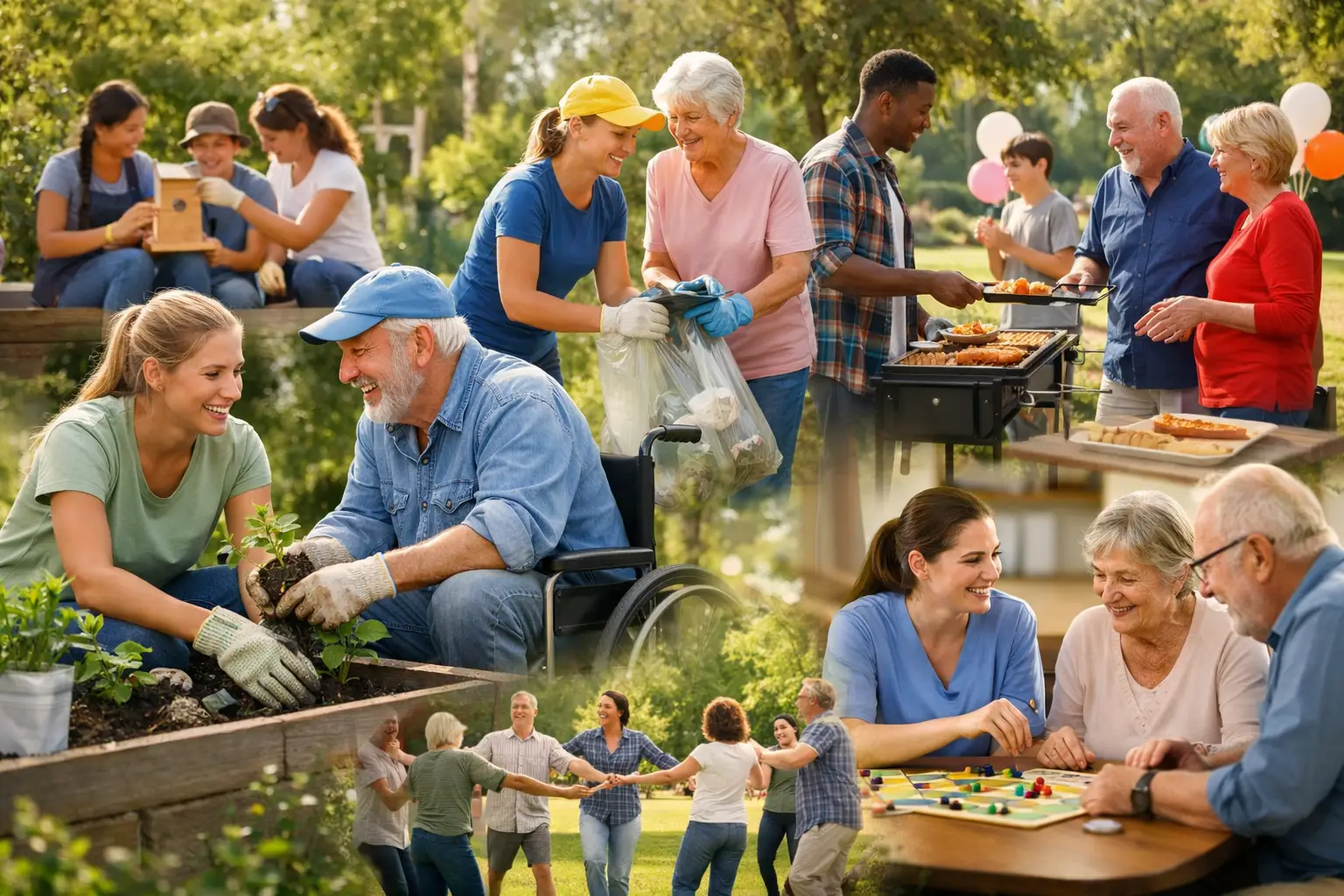
Gardening offers a useful mix of movement, routine, sensory engagement and visible achievement. Community gardens can also create natural social contact without pressure for constant conversation.
This works particularly well for participants who prefer practical tasks over formal group interaction. It may be less suitable during extreme weather or for people whose health needs make outdoor settings difficult without careful planning.
10. Work experience and employment pathway activities
For participants with employment goals, community participation should not stop at social outings. Work experience, job-readiness programs, supported career planning and volunteering with a pathway to paid work can all be valuable.
The best approach depends on the participant’s capacity, confidence and support needs. Some people are ready for structured placement. Others may need to begin with routine-building, travel practice, communication skills or shorter activity blocks.
11. Faith, spiritual or cultural connection
Community participation is not only about activity. It is also about belonging. For many participants, attending faith-based gatherings, cultural events, language groups or community celebrations is central to identity and wellbeing.
These settings can strengthen family connection, cultural safety and emotional resilience. They are especially important when a participant has felt isolated or disconnected from community life.
12. Cafes, social meet-ups and confidence-building outings
Sometimes the best community participation ideas are the simplest. Visiting a cafe, meeting a small group for lunch or attending a regular social outing can build conversation skills, confidence and comfort in public spaces.
Simple does not mean low value. For a participant rebuilding confidence after illness, hospital discharge, behavioural distress or long periods of isolation, a short and successful outing can be a major step forward.
How to choose the best community participation ideas
The starting point should always be the participant’s goals and current capacity. If the goal is independence, practical tasks like shopping, transport training and skill-based classes may be the right fit. If the goal is reducing isolation, peer groups, volunteering or regular social outings may be more useful. If the goal is emotional regulation or confidence, lower-pressure and highly predictable activities may work best at first.
It also helps to look honestly at barriers. Transport is a common one, especially in outer metro, regional and remote areas. Support worker matching matters too. A participant is more likely to engage well when supported by someone who understands their communication style, health needs, routines and preferences.
Risk should be managed, not used as a reason to avoid participation altogether. With the right support planning, many participants with complex behaviours, mobility challenges, psychosocial disability or high-intensity care needs can still access meaningful community experiences. The activity may need to be adapted, staged or delivered with more support, but it should still remain possible.
Best community participation ideas work when support is consistent
A good idea is only the beginning. Outcomes usually come from consistency. One enjoyable outing is positive, but regular participation is what builds trust, routine and skill over time.
That is why reliable support matters. Families and coordinators often see the difference straight away when services are well organised, communication is clear and staff understand both clinical needs and personal goals. Participants are more likely to keep engaging when support feels calm, respectful and dependable.
For providers supporting people with more complex needs, community participation should be treated as a serious part of care, not an optional extra. It connects directly to wellbeing, independence, confidence and quality of life. Treasure Disability Care takes that view because community access is not just about attendance. It is about helping each person participate in a way that is safe, dignified and genuinely meaningful.
The right activity does not need to be impressive to be effective. It only needs to be the right fit for the person, supported properly, and repeated often enough to become part of a fuller life.