
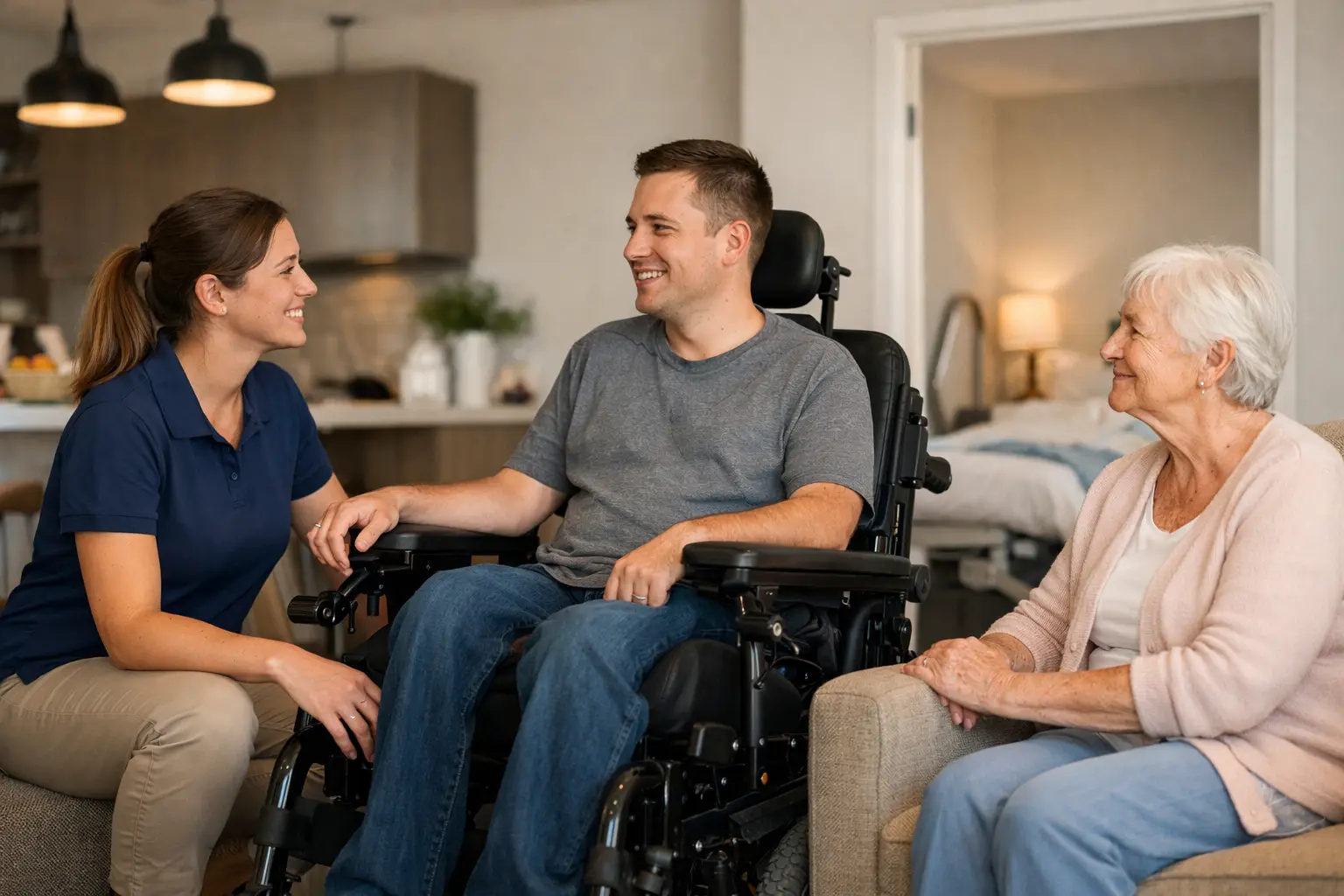
A home can be the right building and still not provide enough day-to-day support. Equally, a person may have excellent support workers but be living in a home that cannot safely meet their physical or sensory needs. That is the key distinction in SIL versus SDA: one relates to support, while the other relates to housing.
For participants, families and referrers, the terms can feel confusing because they are often discussed together. They can be used together, but they are separate NDIS supports with different purposes, eligibility considerations and funding arrangements.
SIL versus SDA at a glance
Supported Independent Living (SIL) funds the support a participant needs to live as independently as possible, usually in a shared home. It may cover help with personal care, cooking, household tasks, building daily living skills, medication support and overnight assistance, depending on the participant’s needs and plan.
Specialist Disability Accommodation (SDA) is funding for the home itself. It is designed for eligible NDIS participants with very high support needs or extreme functional impairment who need specialist housing features. These homes may include improved accessibility, assistive technology, reinforced construction or design features that allow support to be delivered safely.
Put simply: SIL is about the people and supports that help someone live day to day. SDA is about the specialist design of the place where they live.
A participant may receive SIL without SDA, SDA without SIL, both, or neither. The right pathway depends on individual needs, goals, current living situation and NDIS funding decisions.
What SIL can include
SIL is intended to support daily living, not simply provide a tenancy. It is commonly considered where a person requires regular assistance throughout the day, overnight or both, and where shared supports may be appropriate.
The level of support varies considerably. One participant may need prompting and skill development with meals, budgeting and routines. Another may need active overnight support, complex personal care, behaviour support strategies or help from workers trained in high-intensity supports.
SIL funding is generally used for support worker costs associated with shared living arrangements. This can include assistance with:
- personal care, hygiene and dressing
- meal planning, cooking and household tasks
- daily routines, appointments and medication support
- developing independence and community participation
- overnight supervision or active support, where funded and required
It does not normally pay a participant’s rent, groceries, utilities or ordinary household expenses. Those personal living costs remain separate.
SIL should also not be treated as a one-size-fits-all roster. A good arrangement starts with a clear understanding of what a person can do independently, where they need assistance and how support can build confidence rather than take over. Cultural preferences, communication style, routines, family connections and choice of housemates all matter.
What SDA can include
SDA is not a support worker service and it is not available simply because someone wants a newer or more suitable home. It is a housing support for people with significant and ongoing needs that require specialist design.
SDA homes are generally enrolled under categories that reflect the type of design provided. Depending on the home and a participant’s needs, features can include step-free access, wider doorways, accessible bathrooms, ceiling hoists, assistive technology, space for support workers, or more durable finishes for people with complex behaviours.
The aim is to reduce barriers and create a home environment that supports safety, independence and sustainable care. For example, an accessible bathroom may allow a participant to use equipment safely with less physical strain for them and their support team. Technology may also support greater privacy or independence in some daily tasks.
SDA funding contributes to the cost of specialist housing. It does not usually cover day-to-day supports, personal expenses or every cost connected with living in the property. Participants may still pay rent and other reasonable living costs, calculated in line with relevant arrangements.
Can you have SIL and SDA together?
Yes. A person who needs both specialist housing and substantial daily support may have SDA funding for their home and SIL funding for their support arrangements. These supports can work alongside each other, but approval for one does not automatically mean approval for the other.
For example, a participant with significant mobility needs may require an accessible SDA home with room for equipment and safe transfers. If they also need support workers for personal care, meal preparation and overnight assistance, SIL may be considered separately.
On the other hand, someone may live in an ordinary rental property and receive SIL because their main need is daily support rather than specialist building features. Another participant may have SDA funding but use a different mix of individual supports, depending on how they live and the assistance they require.
This is why it helps to separate two questions: “What kind of home do I need?” and “What support do I need while living there?”
How to work out which pathway may fit
Start with the person’s everyday life, not the funding label. Consider what is working, what is unsafe or unsustainable, and what a better home and support arrangement would make possible.
For SIL, useful evidence often describes the frequency, type and intensity of daily support required. This may include functional assessments, behaviour support information, allied health reports, incident history where relevant, current support rosters and observations from family or providers. The focus should be on the participant’s actual support needs and goals.
For SDA, evidence generally needs to explain why ordinary housing options, including reasonable modifications, are unlikely to meet the person’s needs over the long term. Reports may outline mobility, sensory, cognitive or behavioural needs, equipment requirements, risks in the current environment and how specialist design would improve safety and independence.
A support coordinator, allied health professional or trusted provider can help bring this information together. Families often carry a detailed understanding of what happens outside formal appointments, so their practical observations are valuable too. Clear examples are more helpful than broad statements. Explain what happens during transfers, personal care, night-time routines, cooking, access in and out of the home, or periods of distress.
Choosing a provider and home arrangement
The right arrangement is not only about funding. It is also about whether the service can deliver consistent, respectful support that fits the participant’s life.
When considering SIL, ask how rosters are developed, how workers are matched, how continuity is supported and what happens if needs change. If a participant has complex health needs, behaviours of concern or communication needs, ask about staff training, supervision and escalation processes. It is reasonable to want a clear picture of how safe, person-centred care will be delivered across weekdays, weekends and overnight periods.
When considering SDA, ask about the design category, accessibility features, tenancy arrangements, housemate compatibility where relevant and the separation between housing and support services. A participant should understand their choices and have genuine input into where and how they live.
Treasure Disability Care can assist participants, families and referrers to explore SIL and SDA pathways, including complex support needs, transition planning and hospital discharge arrangements. Any accommodation or support option needs to be assessed for participant suitability and availability.
A careful transition matters
Moving home or changing support arrangements can be a major adjustment. Rushed decisions can create stress for participants, families and staff, particularly where there are high support needs or established routines.
A thoughtful transition plan may include visits to the home, introductions to workers, clear information about routines, medication and health supports, behaviour support plans, communication preferences and a plan for keeping family and informal supports involved. For a person leaving hospital, rehabilitation or an unstable living situation, early coordination can help identify practical needs before the move.
The best SIL or SDA pathway is the one that gives the participant more choice, safety and stability in everyday life, while respecting that a home should feel like their own.