
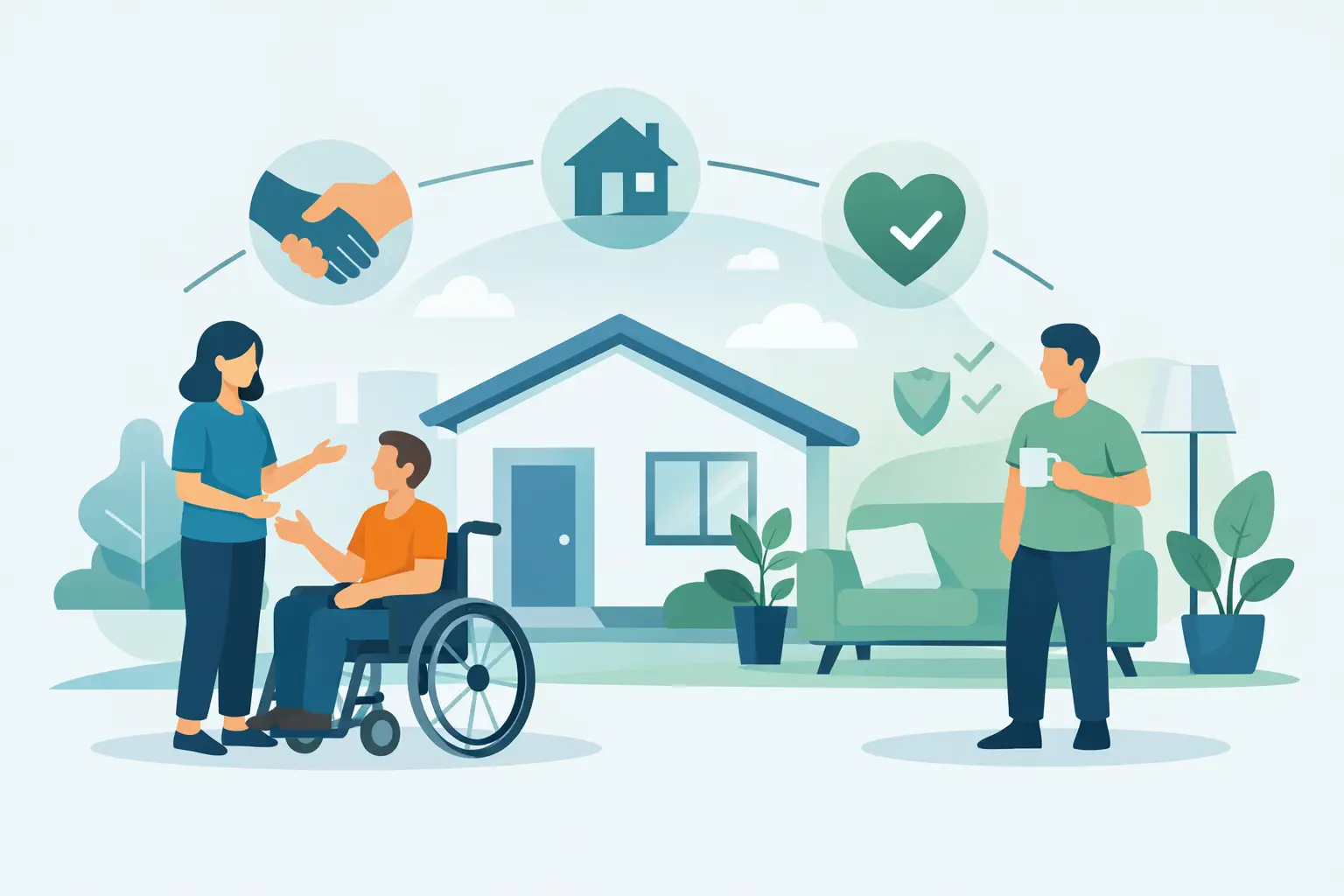
When a person needs daily support at home, the biggest question is often not whether support is needed, but whether that support meets the supported independent living requirements under the NDIS. For participants, families and support coordinators, that distinction matters. It affects funding, housing options, staffing models and how quickly the right supports can be put in place.
Supported Independent Living, or SIL, is designed for people who need regular help with everyday tasks so they can live as independently as possible. That can include support with personal care, meal preparation, medication, household routines, community access and overnight assistance. SIL is not simply about sharing a house or having a support worker drop in. It is intended for people whose support needs are significant enough that ongoing assistance in the home is reasonable and necessary.
What supported independent living requirements actually mean
In practical terms, supported independent living requirements refer to the threshold a participant must meet for SIL to be funded. The NDIS is looking at the person’s disability-related support needs, not just their diagnosis or their preference for a particular home. A participant may have a permanent disability, but SIL funding will usually depend on whether they require a substantial level of support with daily living over the course of the day, and sometimes overnight.
This is where confusion can happen. Housing and support are related, but they are not the same thing. SIL generally funds the supports delivered in the home. It does not usually cover rent, groceries or day-to-day household bills. If a participant also needs a purpose-built or highly accessible property, that may involve Specialist Disability Accommodation, or SDA, which is assessed separately.
For some people, SIL is the right long-term solution. For others, a lower level of in-home support, drop-in supports or a different living arrangement may be more appropriate. The right answer depends on the person’s functional capacity, risks, goals and the consistency of support they need.
Who is most likely to meet SIL requirements?
Participants who meet supported independent living requirements often have high or complex support needs. They may need active assistance with most daily tasks, regular prompting and supervision, or support from more than one worker at certain times. Some participants have behaviour support needs, mobility issues, complex health requirements or communication barriers that make unsupported living unsafe or unrealistic.
A person may be more likely to qualify for SIL if they need support across multiple parts of the day, require overnight monitoring or assistance, or would be at significant risk without structured support in the home. That risk might relate to falls, medication, mealtime safety, personal care, emotional regulation or vulnerability in the community.
At the same time, SIL is not limited to one type of disability. Physical disability, intellectual disability, acquired brain injury, psychosocial disability and autism can all be relevant if the functional impact is substantial. The NDIS is interested in how the disability affects daily living, not in applying a one-size-fits-all rule.
The evidence needed to show supported independent living requirements
Strong evidence is usually the difference between a clear SIL application and one that stalls. The NDIS will generally expect recent, detailed information showing why the participant needs this level of support and why other options may not be enough.
That evidence can include functional assessments, allied health reports, behaviour support documentation, medical information and a clear history of current supports. Reports should describe what the participant can do independently, where they need assistance, what happens when support is not available and how often support is required. General statements such as “needs help at home” are rarely enough on their own.
What matters most is detail. If a participant needs prompting to shower, the report should explain whether prompting is occasional or needed every day. If meal support is required, it should clarify whether the person needs supervision, physical assistance or full preparation due to swallowing concerns, executive functioning issues or other risks. If there are overnight needs, those should be described clearly rather than treated as an afterthought.
Consistency matters too. If reports, support notes and assessments tell different stories, the application may face delays or requests for clarification. Families and coordinators often find it helpful to gather evidence from the people who know the participant best, including therapists, support workers and clinicians involved in day-to-day care.
How the NDIS assesses SIL funding
SIL is usually assessed through a process that looks closely at the participant’s support profile. The NDIS often requires a formal SIL assessment and supporting reports, particularly when the support ratio is high or the needs are complex. The aim is to work out what level of funded support is reasonable and necessary within the home.
This process is not only about hours. The NDIS will also consider the type of support needed, the skill level required, whether support can be shared with other residents and whether there are times when one-to-one support is essential. A participant who needs help with morning and evening routines but is mostly independent during the day may need a different model from someone who needs continuous supervision and behaviour support.
Shared supports can affect the outcome. In a SIL home, some support costs may be shared across residents, while others are allocated to an individual participant. That can make SIL more viable in some settings, but it also means compatibility, household dynamics and staffing structure matter. Not every participant is suited to a shared arrangement, especially where there are complex behaviours, sensory needs or health risks.
SIL requirements and housing choice
Meeting supported independent living requirements does not automatically mean every housing option will be suitable. The support model needs to match the participant’s routines, goals and safety requirements. A well-matched home can improve stability, skill development and quality of life. A poor match can create stress, conflict and avoidable provider changes.
This is why assessments should not be treated as paperwork only. The participant’s preferences, communication style, cultural background, household compatibility and long-term goals all matter. Some people thrive in a shared home with structured routines and regular social connection. Others need a quieter environment, more tailored staffing or specialist design features.
For participants with high-intensity needs, provider capability is a major factor. Complex bowel care, epilepsy support, mealtime management, behaviour support implementation or two-person transfers require more than goodwill. They require trained staff, clear clinical governance and the operational capacity to respond consistently.
Common reasons SIL applications are delayed or declined
One of the most common issues is weak evidence. If reports do not explain why daily support is required, or if they fail to link support needs clearly to the participant’s disability, the NDIS may decide a lower level of support is more appropriate.
Another issue is when the application focuses too heavily on housing stress rather than disability support need. Unstable housing is a serious concern, but SIL is funded because of the support required in the home, not simply because accommodation is hard to secure. Both issues can exist at once, but they need to be addressed separately and clearly.
Applications can also be complicated when the proposed roster does not align with the evidence. If a participant is said to need active overnight support, for example, the documentation should explain why sleepover support would not be enough. If one-to-one staffing is requested, there should be a clear functional or risk-based reason.
What families and coordinators can do next
If you are trying to work out whether a participant meets supported independent living requirements, start with the reality of daily life. Look at what support is needed from waking through to bedtime, what happens when support is delayed, and what risks exist in the current arrangement. That picture is usually more useful than broad labels.
From there, gather current evidence and make sure it speaks plainly. The strongest SIL submissions are practical, specific and consistent. They explain the participant’s needs in a way that reflects real life, not ideal circumstances.
It also helps to work with a provider that understands complex referrals, urgent onboarding and the difference between a standard support model and one built for high-needs participants. Treasure Disability Care supports participants and referral partners who need responsive, clinically capable SIL services, including situations where time, safety and continuity of care are critical.
The right SIL outcome is not just about getting funding approved. It is about creating a living arrangement where the person feels safe, respected and genuinely supported to build the life they want. When the evidence is clear and the support model is right, that outcome becomes far more achievable.